She couldn't help her dad – but now she's helping other dementia patients with tech
When Melissa Chan was xviii years former, her father went missing once again. Information technology had happened four years earlier, simply this time he'd been gone for two days. His dementia had gotten worse.
"Nosotros stayed in Woodlands. My mum had dropped him off at his function at Potong Pasir, and when she went to pick him up, she couldn't find him and started panicking," Melissa recalled. "At that place was no Facebook. We had to SMS anybody, and the police followed the missing persons protocol, which meant waiting for 24 hours."
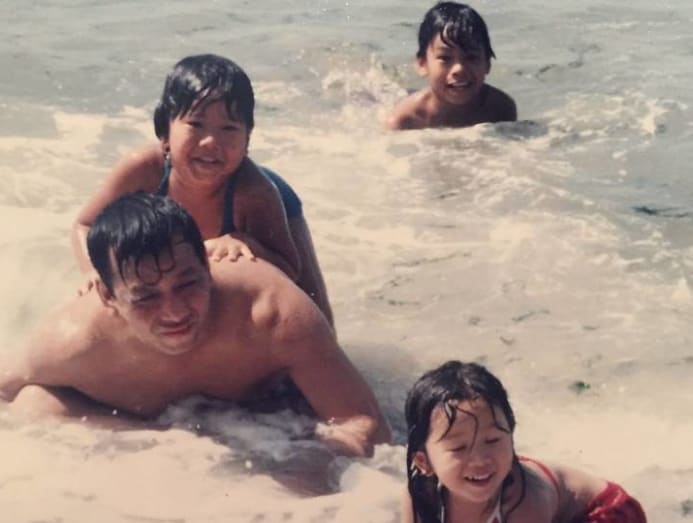
Her father was somewhen found sitting on a sofa a few blocks from their home – he had somehow managed to find his style to the neighbourhood, but not quite habitation.
"When I think about information technology, I can imagine how painful and dislocated he was sitting there. When I saw him at the police station, his shirt was tucked out and he had lost his shoes," said Melissa. "The sofa he was sitting in was the aforementioned colour as the one nosotros used to have."
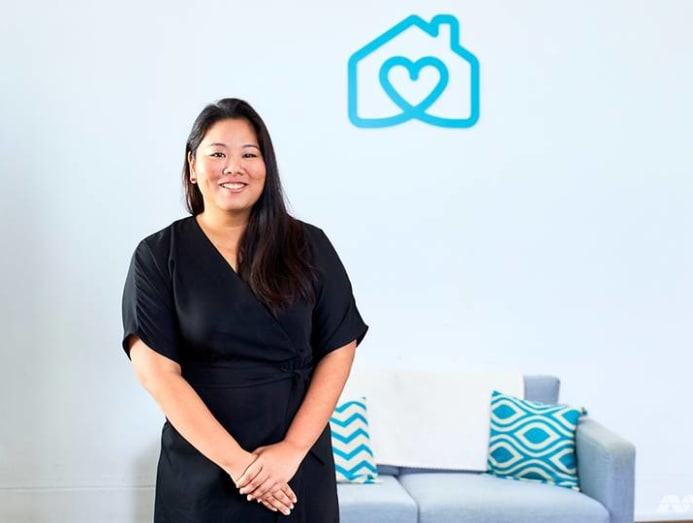
That incident, along with many others every bit she, her siblings and their mother struggled to care for her father, would eventually prompt the 28-year-erstwhile Singaporean to start a social enterprise for dementia caregivers and, later, join an even bigger showtime-up with bigger aspirations.
GIVING SUPPORT FOR CAREGIVERS
Founded shortly later on Melissa'due south father passed away in 2014, the much-lauded Projection We Forgot has been actively performance as a kind of support grouping for caregivers of persons with dementia, through online forums, workshops and other activities.

It was community that her family didn't have back then. "As a family, we never spoke about it. My mother was struggling to figure out what was happening to her husband, and care for us," said Melissa. "I'd cancel appointments with friends because I felt a sense of guilt. I decided not to go overseas for educational activity because a part of me worried that my begetter would forget who I was when I came dorsum."
I lightbulb moment to commencement PWF would likewise come from an unlikely source: Comedian Seth Rogen.
"He's seen as someone super funny but I saw him speaking in (US) Congress about dementia – his wife'south mother had it and the two of them had to treat her. I was very impressed because he was using a different fashion to educate them about the condition, and the struggles of caregivers," she said.
"I realised there was zippo similar that in Singapore. When y'all Google, you run into Western faces. Any information was very medical, and enquiry papers. But it's a very human journey."
Starting PWF entailed a sharp career detour. Melissa had previously worked in the hospitality and tech industries (in marketing and communications for Due west Hotels and later, a travel tech start-up) – merely both experiences proved crucial.
"I realised that at the cease of the mean solar day, information technology's almost taking (complicated data) and making it accessible for people to digest."
She and her PWF team turned to social media after discovering there were caregivers overseas who were using Instagram as a platform. "They were sharing stories, talking about day-to-day experiences, videoing themselves about their struggles."
And it worked. Today, PWF continues to organise activities in Singapore (most recently a dementia-friendly pattern-a-thon at the National Pattern Centre) and they are aiming to abound in Malaysia, where they're property a pic event in fourth dimension for World Alzheimer's Calendar month this September. Alzheimer's contributes a large per centum to cases of dementia, which is an umbrella term, said Melissa.
They accept have also gotten support from organisations like the National Youth Council, Alzheimer's Affliction Association and Singtel, which had named it i of its Future Makers beginning-up companies in 2017.
CONNECTING CAREGIVERS AND THE ELDERLY
But PWF was just the start of her advancement. Early on this yr, Melissa also joined Homage, another local kickoff-up that is also expanding to Malaysia, which helps connect caregivers with the elderly and their family unit.
I decided not to go overseas for education considering a part of me worried that my male parent would forget who I was when I came dorsum.
For Melissa, who's now likewise caput of Homage'southward community and outreach, information technology was a chance to offer something that PWF could non.
"We've been doing the emotional well-being back up (for caregivers at PWF) and now, Homage has a platform to provide on-demand care (for patients)."
In a nutshell, said Melissa, it's something similar Grab – but for elderly intendance.
The company has a puddle of intendance professionals, or "Intendance Pros", that people tin tap into by using an app or going online, whether it's to ship a loved ane for a medical check-upwards or simply to look after them at home.
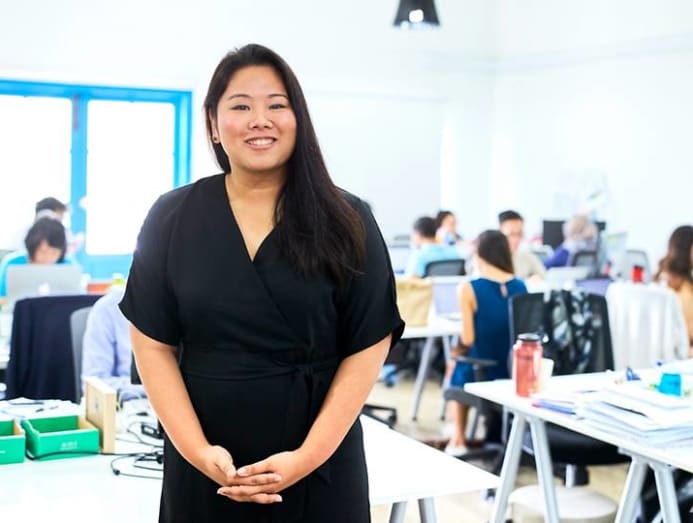
THE IMPORTANCE OF Technology
Information technology might seem strange to be bringing upwardly technology when talking virtually an event where concrete, human interaction is what's nigh vital, but Melissa says beingness continued has really become crucial every bit the population ages and families become smaller and oft busy at piece of work.
"There is a demand to shift the way intendance is delivered, particularly if you're looking at the topic of longterm care for an ageing population," she said. "If a family needs a caregiver in the adjacent two days, can they become it or do they wait ii to three weeks, for example."
Whenever I recall of services at Homage, I call up virtually how my family could've used information technology – merely a few hours to ensure that someone was dwelling to watch over my dad.
"On top of that, people who are tech-savvy will desire information at their fingertips – it'due south no longer simply putting a parent in a nursing home or with a caregiver and not knowing what's happening for a few hours. But knowing how your parent is doing – at that place is a large role for applied science to play in this infinite," said Melissa.
For case, being connected ways i tin can be updated on how the medical engagement or firm visit went without being physically in that location. And the Care Pros, as well, can access previous information about the client-patient through the app so they're prepared earlier even entering the home.

The electric current pool of Care Pros number around one,000, which is a mix of nurses, therapists and non-nurses who are able to provide support. And they're in-demand. "Every hour we're delivering care correct at present," Melissa told CNA Lifestyle.
Joining Homage also resonated with Melissa on a very personal level.
While taking care of her father, in that location were times when the family's schedules wouldn't sync and they had to sometimes resort to locking him up at dwelling.
"It was dangerous and we knew it wasn't the right thing to do, but information technology was our but option sometimes," she said, sadly.
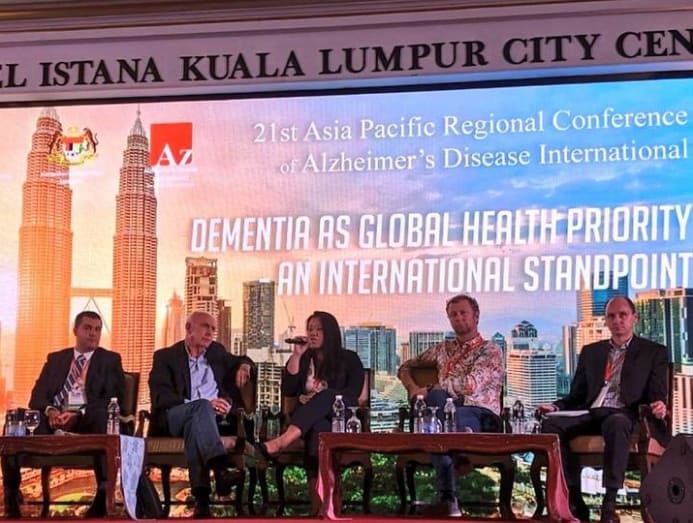
"Whenever I think of services at Homage, I think about how my family could've used it – just a few hours to ensure that someone was home to watch over my dad. Information technology plays a large role in giving families peace of mind – especially small [families] where all are working full-fourth dimension."
"At the end of the 24-hour interval, caregiving and long-term intendance is a human thing," said Melissa, "simply we need to recollect out of the box."
In partnership with Singtel.
schroederwourfact1969.blogspot.com
Source: https://cnalifestyle.channelnewsasia.com/wellness/caring-for-dementia-250021
0 Response to "She couldn't help her dad – but now she's helping other dementia patients with tech"
Post a Comment