What Do I Need to Get a Loan From the Bank
What information technology is
Your credit history is a record of how you've managed your credit over time. It includes credit accounts you've opened or airtight, as well as your repayment history over the past 7-x years. This information is provided by your lenders, also as drove and regime agencies, to then exist scored and reported.
The difference between your credit score and credit written report
Why it matters
A proficient credit score shows that you've responsibly managed your debts and consistently made on-time payments every calendar month.
Your credit score matters because information technology may impact your interest rate, term, and credit limit. The higher your credit score, the more yous may be able to borrow and the lower the interest charge per unit you could receive.
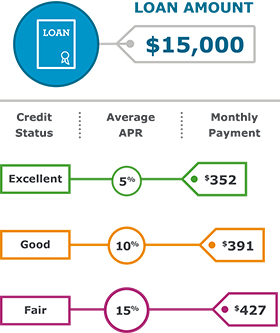
For example, with a skillful or excellent credit score, yous might authorize for a lower interest rate and monthly payment on a loan of $15,000. The example below explains how your credit rating may touch on your annual percentage rate (April) and monthly payment. Rates shown are for illustrative purposes only.
How to get your credit report and credit score
You tin asking your credit study at no cost once a twelvemonth from the pinnacle 3 credit reporting agencies ― Equifax®, Experian®, and TransUnion® through annualcreditreport.com. When yous get your report, review it carefully to make sure your credit history is accurate and free from errors.
It is important to empathize that your complimentary almanac credit study may not include your credit score, and a reporting bureau may charge a fee for your credit score.
Did you know? Eligible Wells Fargo customers can hands access their FICO® Credit Score through Wells Fargo Online® - plus tools tips, and much more than. Learn how to access your FICO Score. Don't worry, requesting your score or reports in these ways won't bear upon your score.
What your credit score means
Your credit score reflects how well you've managed your credit. The 3-digit score, sometimes referred to every bit a FICO® Score, typically ranges from 300-850. Each of the 3 credit reporting agencies employ different scoring systems, so the score you receive from each agency may differ. To sympathize how scores may vary, see how to sympathize credit scores.
Wells Fargo credit score standards
 760+, Excellent
You generally qualify for the best rates, depending on debt-to-income (DTI) ratio and collateral value.
700-759, Skillful
You typically qualify for credit, depending on DTI and collateral value, just may not get the best rates.
621-699, Fair
You may accept more difficulty obtaining credit, and will likely pay college rates for information technology.
620 & below, Poor
You may have difficulty obtaining unsecured credit.
No credit score
You may not take built upwardly plenty credit to calculate a score, or your credit has been inactive for some fourth dimension.
What information technology is
Chapters is an indicator of the probability that you'll consistently exist able to brand payments on a new credit business relationship. Lenders use dissimilar factors to determine your ability to repay, including reviewing your monthly income and comparing information technology to your fiscal obligations. This calculation is referred to as your debt-to-income (DTI) ratio, which is the per centum of your monthly income that goes toward expenses like hire, and loan or credit card payments.
Why information technology matters
Lenders await at your debt-to-income (DTI) ratio when they're evaluating your credit application to assess whether you're able to accept on new debt. A low DTI ratio is a good indicator that yous have enough income to meet your current monthly obligations, have intendance of additional or unexpected expenses, and make the additional payment each month on the new credit business relationship.
How to calculate your debt-to-income (DTI)
Larn how DTI is calculated, see our standards for DTI ratios, and observe out how you may better your DTI.
Understand your debt-to-income ratio
Our standards for Debt-to-Income (DTI) ratio
In one case you've calculated your DTI ratio, you lot'll desire to sympathise how lenders review it when they're considering your application. Take a expect at the guidelines we use:
 35% or less: Looking Proficient - Relative to your income, your debt is at a manageable level
You most likely have coin left over for saving or spending later on you've paid your bills. Lenders generally view a lower DTI equally favorable.
36% to 49%: Opportunity to meliorate
You're managing your debt adequately, but you lot may want to consider lowering your DTI. This may put you in a better position to handle unforeseen expenses. If y'all're looking to borrow, keep in mind that lenders may ask for boosted eligibility criteria.
50% or more: Take Action - You lot may have limited funds to salve or spend
With more than half your income going toward debt payments, you may not accept much money left to save, spend, or handle unforeseen expenses. With this DTI ratio, lenders may limit your borrowing options.
What it is
Collateral is a personal asset you own such as a car, a savings account, or a abode.
Why it matters
Collateral is important to lenders because it offsets the take chances they take when they offer you credit. Using your assets as collateral gives you more borrowing options ― including credit accounts that may have lower interest rates and ameliorate terms.
Using collateral
If yous have assets like equity in your home, y'all could potentially utilize your home equity every bit collateral to secure a loan ― this may allow you to accept advantage of a college credit limit, improve terms, and a lower charge per unit. But, remember, when you utilise an asset as collateral, the lender may accept the right to repossess information technology if the loan is not paid dorsum.
What it is
Lenders evaluate the capital you accept when you employ for big credit accounts like a mortgage, home disinterestedness, or personal loan account. Capital represents the avails you lot could employ to repay a loan if yous lost your task or experienced a financial setback.
Capital is typically your savings, investments, or retirement accounts, but it may too include the amount of the down payment yous brand when y'all purchase a dwelling house.
Why information technology matters
Majuscule matters because the more of it you have, the more financially secure you are ― and the more confident the lender may exist near extending you lot credit.
What information technology is
Conditions refer to a diversity of factors that lenders may consider earlier extending credit. The weather may include:
- How you programme to employ the proceeds from the loan or credit account.
- How your loan amount, involvement charge per unit, and term may be impacted by market conditions or the state of the economic system.
- Other factors that may impact your ability to repay the debt ― for case, a mortgage lender wants to know if the property you're buying is in a flood zone or in an area decumbent to wildfires.
Why it matters
Atmospheric condition matter considering they may impact your fiscal situation and ability to repay the loan.
Lenders may likewise consider your client history when yous employ for new credit. Since they may evaluate your overall fiscal responsibility, the relationship you lot've established with them tin can be valuable when you need more credit.
schroederwourfact1969.blogspot.com
Source: https://www.wellsfargo.com/goals-credit/smarter-credit/credit-101/getting-a-loan/
0 Response to "What Do I Need to Get a Loan From the Bank"
Post a Comment